HealthLit4Kids education resource
Education resource home
Browse by learning level
Foundation year
Years 1 and 2
Years 3 and 4
Years 5 and 6
Browse by focus area
Active play and minor games
Alcohol and other drugs
Challenge and adventure activities
Food and nutrition
Fundamental movement skills
Games and sports
Health benefits of physical activity
Lifelong physical activities
Mental health and wellbeing
Relationships and sexuality
Rhythmic and expressive movement activities
Safety
Investigating what we eat: Drinks and cereal
Learning level/s: Years 3 and 4
Focus area/s: Food and nutrition
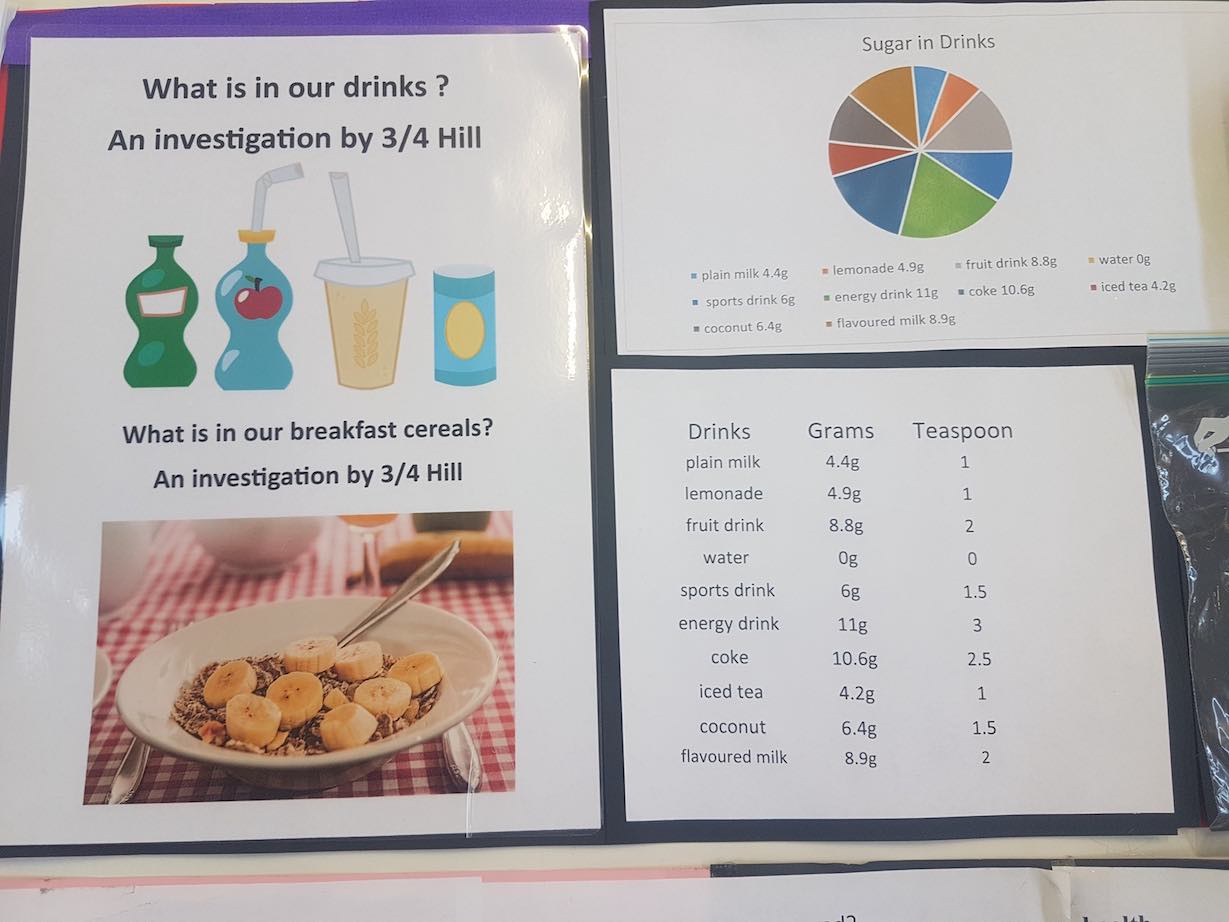
Description: In their maths focused unit students completed an individual inquiry project to examine some common household cereals or drinks to determine what they contained. They learnt about grams, percentages and what the term “recommended daily intake” means. Students extracted the information from the cereal or drink package and entered it into tables in Excel and then graphed their findings. Students then wrote a report to compare the various products. They considered the nutritional value of the products as well as the economic value for money for each product. Students also considered the marketing/representation of the information and wrote a persuasive piece on whether the information on the packaging is clear and accurate. Students were required to be decisive and select one product and justify why they chose it over others.
Measures of success: Students know how to locate and interpret a nutrition label. Students know what breakfast cereals and the drinks they consume contain (nutritional value, sugar or salt content, fibre etc) and how they meet/don’t meet their recommended daily intake requirements. Students learnt to express quantities in grams, percentages and how to compare each. Students learnt about the importance of considering the cost/economic factors that need to be taken into account when selecting food. Students learnt about marketing strategies and how to interpret and question information critically. Students could provide evidence they could critique the information available to them, make a judgement and justify their position on their preferred product.